Mathematics is often called the universal language-but it is far more than numbers on a page. It is the quiet force behind every discovery, every structure, every technological leap, and every decision that shapes our modern world. On National Mathematics Day, we pause to recognise not only the subject itself, but the power of thinking, reasoning, and problem-solving that mathematics cultivates in learners.
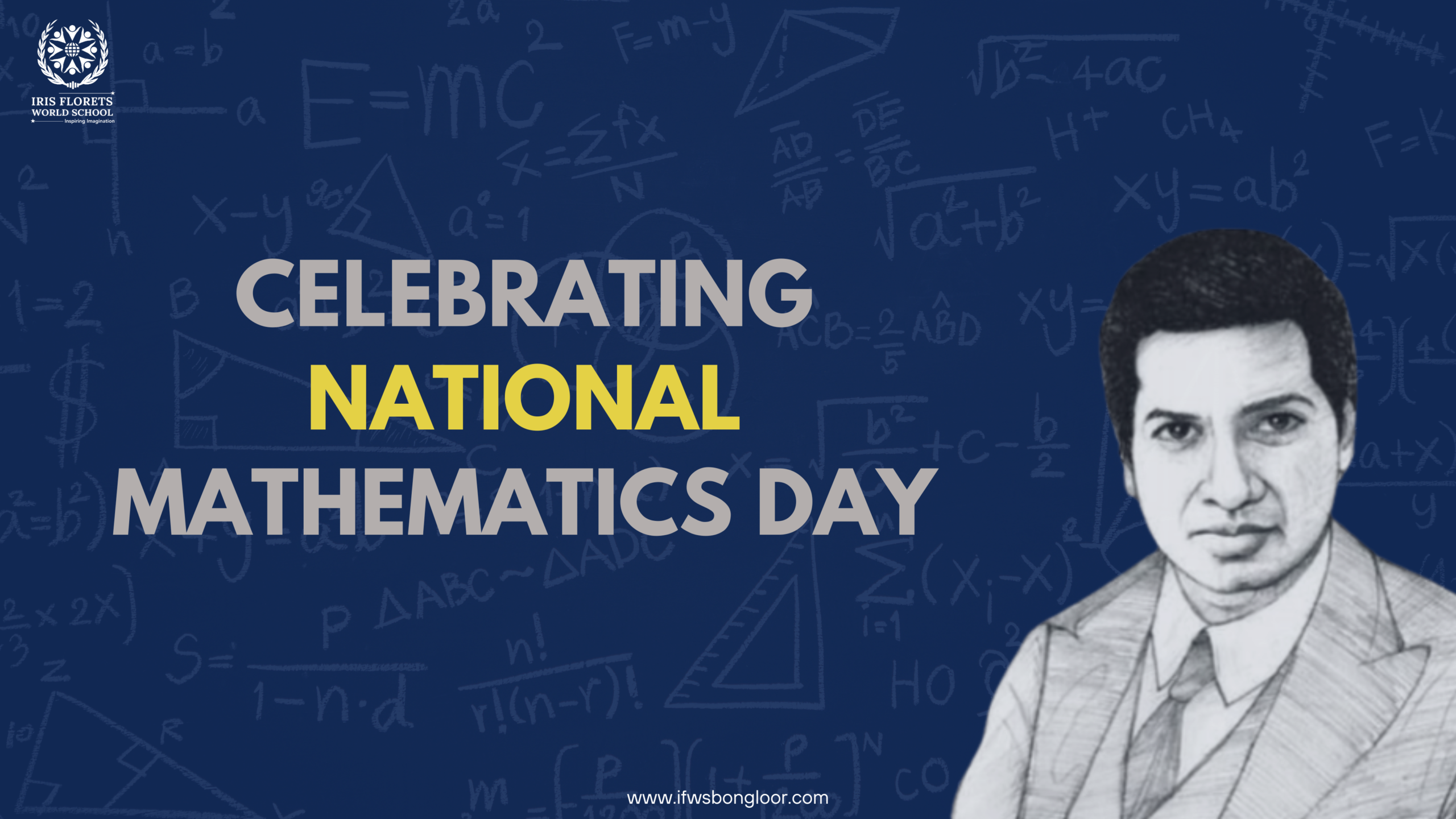
Observed annually on 22 December, National Mathematics Day commemorates the birth anniversary of Srinivasa Ramanujan, one of India’s most extraordinary mathematical minds. The day serves as a reminder that mathematics is not about memorisation-it is about curiosity, imagination, and the courage to explore the unknown.
Why We Celebrate National Mathematics Day
National Mathematics Day was instituted to honour mathematics as a cornerstone of intellectual development and to inspire young learners to appreciate its relevance beyond classrooms. The day encourages students to see mathematics not as an abstract subject, but as a dynamic tool that helps them understand patterns, solve real-world problems, and make informed decisions.
More importantly, it celebrates the process of thinking-logical reasoning, analytical clarity, and perseverance-skills that are essential in every field, from science and technology to economics, design, and everyday life.
Srinivasa Ramanujan: A Legacy of Genius and Imagination
The celebration of Mathematics Day is inseparable from the legacy of Srinivasa Ramanujan, whose life story continues to inspire generations.
Born in 1887, Ramanujan was largely self-taught, working with little formal training or access to academic resources. Yet his intuitive grasp of mathematics led him to discover groundbreaking theories in number theory, infinite series, and mathematical analysis-many of which continue to influence modern research.
What makes Ramanujan’s story extraordinary is not just his brilliance, but his unwavering belief in ideas that others had yet to understand. His journey reminds students that curiosity, dedication, and passion can transcend limitations-and that mathematics is as much about imagination as it is about logic.
How Mathematics Came into Existence
Mathematics did not begin as a subject-it began as a necessity.
Early civilisations developed mathematical concepts to count, measure, trade, track time, and understand nature. From ancient number systems and geometric patterns to algebra, calculus, and modern data science, mathematics has evolved alongside human civilisation.
Each era expanded mathematical understanding to answer new questions:
- How do we measure land and build structures?
- How do we predict the movement of stars and planets?
- How do we optimise systems and analyse data?
The Importance of Mathematics in Education
Mathematics plays a vital role in developing critical thinking and cognitive discipline. It teaches students how to:
- Approach problems systematically
- Analyse information logically
- Recognise patterns and relationships
- Persist through challenges
- Validate conclusions with evidence
These skills extend far beyond examinations. A strong mathematical foundation builds confidence, independence, and clarity of thought-qualities that prepare learners for lifelong learning.
Mathematics in Everyday Life
Mathematics is woven seamlessly into our daily experiences:
- Budgeting, shopping, and financial planning
- Time management and scheduling
- Technology, coding, and artificial intelligence
- Architecture, engineering, and design
- Medicine, economics, and environmental studies
From the algorithms that power smartphones to the data models guiding global decisions, mathematics quietly shapes how we live, communicate, and innovate.
When students recognise these real-world connections, mathematics transforms from a subject to a life skill.
Nurturing Mathematical Thinking in Young Learners
At Iris Florets, mathematics is approached as a tool for understanding, not rote learning. Learners are encouraged to question, explore, visualise, and apply concepts meaningfully.
Through experiential learning, problem-solving activities, and real-life applications, students develop confidence in reasoning and the ability to articulate their thinking clearly. The focus remains on conceptual clarity, curiosity, and joy in learning, ensuring that mathematics becomes accessible and engaging for every child.
Mathematics as a Pathway to Future Readiness
In an increasingly data-driven and technology-focused world, mathematical literacy is essential. Careers of the future-from artificial intelligence and space research to sustainability and economics-are rooted in mathematical understanding.
By nurturing strong foundations early, schools empower students not only to excel academically but to adapt, innovate, and lead with confidence in a rapidly evolving global landscape.
Celebrating the Spirit of Mathematics
National Mathematics Day is more than a celebration of numbers-it is a recognition of the power of reasoning, curiosity, and purposeful problem-solving. Mathematics teaches students to question assumptions, identify patterns, and approach challenges with clarity and confidence-skills that extend far beyond the classroom.
As we honour the legacy of Srinivasa Ramanujan and the enduring relevance of mathematical thinking, we reaffirm our commitment to nurturing learners who think logically, reason ethically, and apply knowledge meaningfully to the world around them.
Schedule a school tour at Iris Florets World School, Bongloor and discover how we cultivate mathematical thinking as a foundation for lifelong learning and future readiness.
Because when students learn to think mathematically, they don’t just understand the world, they learn how to shape it.